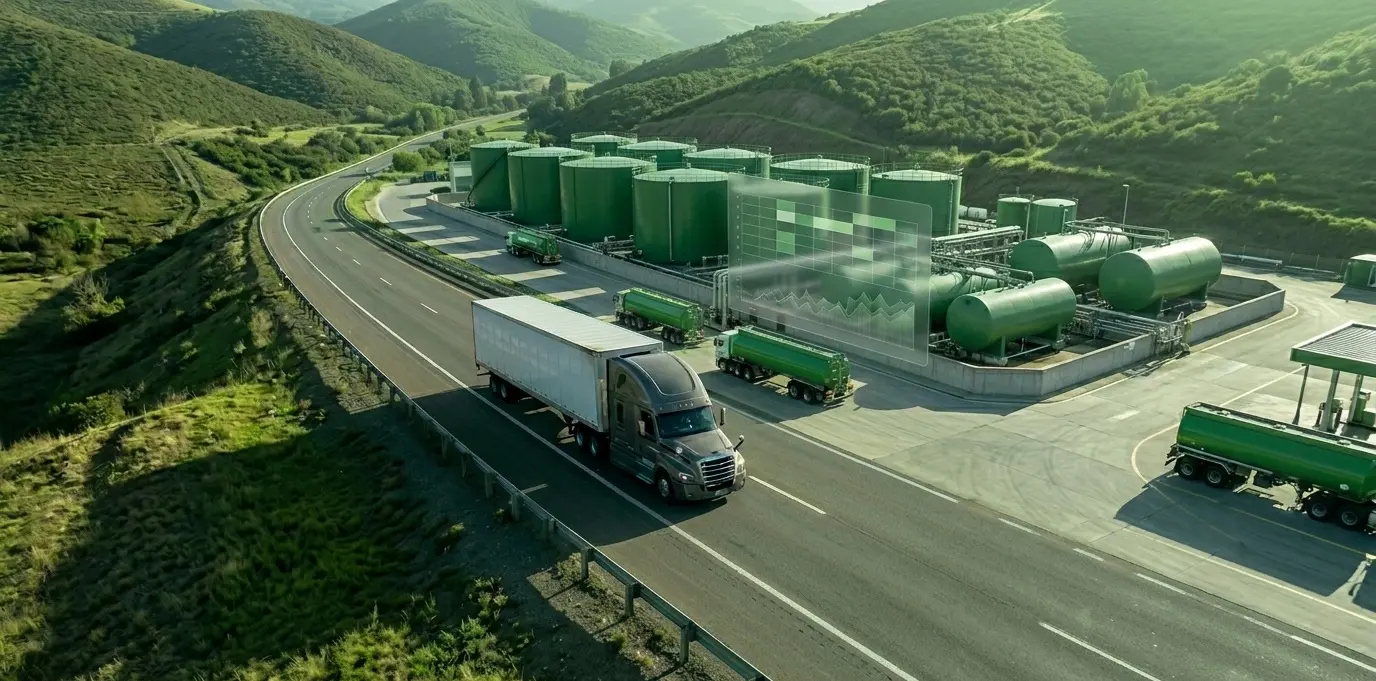
The Hidden Cost of Unmanaged Fuel
For most businesses that run vehicles, machinery, or generators, fuel is one of the largest operational expenses and one of the least controlled. Without a system in place, losses quietly accumulate through:
- Fuel theft: siphoning from tanks, ghost dispensing, or falsified fill-up records
- Unauthorised use: after-hours dispensing to personal vehicles or contractors
- Inaccurate reconciliation: manual dip readings that miss slow leaks or evaporation
- Inefficient consumption: no visibility into which machines or drivers are burning excess fuel
Industry data shows that businesses without formal fuel controls can lose between 5% and 10% of their total fuel volume to theft, unauthorised use, and untracked waste. On a fleet consuming 50 000 litres per month at current South African diesel prices, that is a six-figure annual loss.
What Is a Fuel Management System?
A fuel management system (FMS) is a combination of hardware and software designed to monitor, control, and report on every aspect of fuel storage and dispensing.
A complete system typically includes:
- Level sensors: installed in storage tanks, measuring fuel volume in real time, accurate to within 1 litre
- Flow meters: on dispensing points, recording exactly how much fuel was drawn and when
- Controllers: authenticating dispensing events using PIN codes, key tags, or RFID cards
- A cloud-connected dashboard: aggregating all data, flagging anomalies, and generating reports
The result is a closed-loop system where every litre entering the tank is reconciled against every litre leaving it. Discrepancies surface immediately rather than at month-end.
Key Features to Look For
Not all systems are equal. When evaluating a fuel management solution for your operation, these are the features that separate a basic meter from a genuinely useful management tool:
Real-Time Tank Monitoring
You should be able to see current tank levels from any device at any time. Look for systems that support multiple tanks simultaneously across all your fuel storage.
Tag-Based Authentication
Every dispensing event should be linked to a specific person, vehicle, or machine. Tag-based or PIN-based authentication creates an audit trail that makes it easy to identify unusual patterns and removes plausible deniability from theft.
Automated Alerts
Manual monitoring is not practical at scale. A good system will send instant SMS or email notifications for:
- Fuel drainage or sudden unexplained drops in tank level
- Dispensing outside approved hours
- Volumes exceeding a set threshold per transaction
- Low-level warnings before you run dry
- Water contamination detected in the tank
Comprehensive Reporting
Raw data is only useful if it can be turned into decisions. Your system should provide reports (daily, weekly, or monthly) covering consumption per vehicle or machine, cost-per-kilometre or cost-per-hour calculations, and period-on-period comparisons that reveal trends.
Integration Capability
The best systems connect to your existing telematics, ERP, or fleet management software via API, so fuel data flows automatically into your broader operational picture without manual data entry.
Why Manual Fuel Control Fails
Many operations still rely on paper logs, manual dip readings, and driver-reported fill-ups. These methods share a fundamental flaw, as they depend on human accuracy and honesty at every step, with no independent verification.
By the time a discrepancy is spotted (usually at month-end reconciliation), the fuel is long gone and the trail is cold. You can confirm a loss but rarely recover it or prevent it from happening again next month.
Real accountability requires a system that records dispensing events automatically, in real time, independent of the person drawing the fuel.
Mobile Bowser Management
Stationary tanks are one thing. Mobile bowsers (refuelling trailers or trucks that move fuel between a main storage point and machinery in the field) introduce a different set of risks.
Without control systems, a mobile bowser is difficult to audit. It can be driven off-route, used to fill unauthorised vehicles, or have its meter wound back. Because it moves, physical oversight is inconsistent.
A properly equipped bowser should carry the same controls as a fixed installation, including a flow meter, controller with tag or PIN authentication, and cellular or satellite connectivity to report dispensing events back to the central dashboard in real time. Location tracking integration adds an additional layer, as fuel drawn in the field can be cross-referenced against where the bowser actually was.
Who Benefits Most?
Fuel management systems deliver the strongest return in operations where fuel is consumed in large volumes across multiple points.
Mining and heavy industry: bulk diesel storage feeding multiple excavators, haul trucks, and generators across a site is difficult to police manually. Remote locations make physical oversight impractical, making automated monitoring essential.
Agriculture: farms running tractors, pivot irrigation systems, and grain dryers often store thousands of litres on-site with minimal staff oversight. Seasonal theft spikes during harvest when contractors are on the property.
Fleet and logistics: route-based businesses need to reconcile pump fill-ups against actual mileage. Anomalies often point to fuel card misuse or vehicles being filled off-route.
Construction: plant-heavy contractors manage fuel across multiple active sites simultaneously. Centralised reporting allows head office to compare consumption across projects and flag outliers.
Hospitality, retail, and manufacturing with backup generators: persistent load-shedding has made generator fuel a significant and frequently targeted cost centre.
The ROI Case
The payback period for a professionally installed fuel management system is typically short. Consider a mid-sized operation:
- Monthly diesel consumption: 40 000 litres
- Current price (May 2026): approximately R32.00/litre
- Monthly fuel spend: ~R1 280 000
- Estimated loss at 5% wastage/theft: ~R64 000/month
A system that recovers even half of that leakage (R32 000/month) represents a significant and ongoing return on investment.
Beyond the direct financial case, there are secondary benefits, including better maintenance scheduling (machines consuming abnormally high fuel are often due for a service), reduced administrative burden on accounts staff, and stronger evidence if a theft dispute ever reaches disciplinary or legal proceedings.
Compliance, Audit, and Governance Benefits
Beyond loss prevention, a fuel management system generates the kind of documentation that strengthens your operation in several other ways:
- Internal governance: cost-centre reporting gives management accurate data for budgeting and accountability, rather than estimates
- Cost allocation: fuel costs can be allocated precisely to specific projects, vehicles, or departments, improving job costing accuracy
- Insurance: documented dispensing logs and anomaly alerts provide evidence that controls were in place, which can be relevant to fuel theft insurance claims
- Disciplinary proceedings: when theft is suspected, a digital audit trail showing exactly who authenticated a dispensing event, at what time, and for what volume, is far more defensible than a paper log
Data replaces assumption. When a dispute arises, you have facts.
What to Expect From Installation
A reputable supplier will conduct a site survey before recommending hardware. Key variables include tank size and construction, the number of dispensing points, connectivity options (cellular, Wi-Fi, or satellite in remote areas), and whether existing flow meters or pulse outputs can be integrated.
Professional installation and calibration is important, as a poorly calibrated sensor defeats the purpose of the system. Look for a supplier that offers ongoing support and remote diagnostics, not just a once-off hardware sale.
R2D Fuel designs and installs fuel management systems for operations of all sizes and industries across South Africa and the broader region. Our systems monitor up to nine tanks simultaneously with 1-litre accuracy, and include real-time alerts, 30+ comprehensive reports, and full API integration. Contact us to discuss your site requirements.